Source Waterproof Large Capacity Tennis Bag for Travel Hiking Camping
Compare 30 listings for a waterproof large capacity tennis bag designed for outdoor sports, travel, and hiking. Buyers can evaluate features like water resistance, capacity, and customization options from verified suppliers in Fujian, China; compare the available evidence and request quotations based on your requirements.
Key considerations
Products List




Comprehensive Sourcing Guide
Waterproof Large Capacity Tennis Bag Sourcing Guide
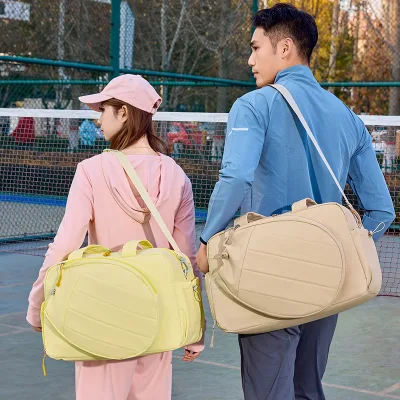
Procuring waterproof large capacity tennis bags requires a strategic approach that balances material durability with functional storage needs. Buyers must prioritize suppliers who demonstrate expertise in polyester net fabric construction, ensuring the product can withstand rigorous outdoor sports environments. The observed market data indicates a strong emphasis on customization, with many manufacturers offering OEM and ODM services to tailor designs for specific brand identities. This flexibility allows buyers to align product aesthetics with their target demographic while maintaining the structural integrity required for heavy-duty use.
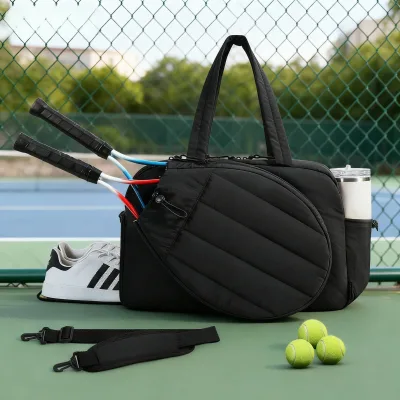
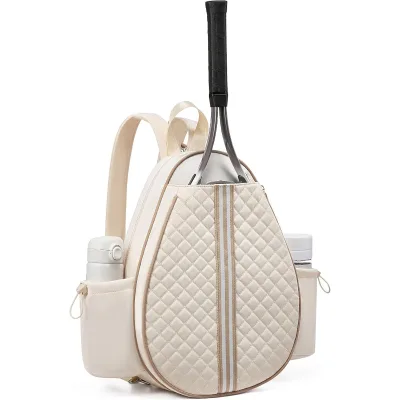
The sourcing landscape reveals a diverse range of product types, including dedicated badminton backpacks and specialized tennis racket bags. These items often feature water-resistant properties and are designed for unisex use, catering to a broad audience of athletes and recreational players. Buyers should carefully evaluate the single gross weight and package dimensions to ensure efficient logistics and storage. Understanding these physical attributes is crucial for determining the final retail price point and ensuring the product meets the expected quality standards for outdoor sport travel and hiking applications.
Product Scope and Observed Listing Signals
The current market listings highlight a significant variation in product specifications, ranging from compact racket covers to larger backpacks with capacities between 20 and 35 liters. This diversity suggests that buyers must clearly define their storage requirements before engaging with suppliers. The observed price range of 4.5 to 40.2 USD reflects differences in material quality, customization complexity, and order volume. Buyers should note that lower price points may correspond to simpler designs or higher minimum order quantities, while premium pricing often includes advanced features like enhanced water resistance or specialized internal compartments for racket protection.
Listing signals also indicate a strong trend toward customizable designs, with many suppliers accepting customized logos and accepting OEM orders. The minimum order quantities (MOQ) vary widely, from as low as 5 pieces for samples to 1000 pieces for bulk production, with common thresholds around 300 to 500 pieces. This flexibility allows businesses of different sizes to enter the market, but it also requires careful planning to balance inventory costs with brand visibility. Buyers should verify the sample time, which typically ranges from 7 to 15 days, to ensure timely product development and market launch.
Technical Specifications to Verify
Verifying technical specifications is critical to ensuring the product meets functional requirements for tennis and badminton equipment storage. Buyers should confirm the exact dimensions of the product, as observed standards range from 45cm x 32cm x 23cm to larger sizes like 56cm x 42cm x 5cm for specific racket covers. The material composition, primarily polyester net fabric, should be assessed for its durability and water-resistant properties. It is essential to verify that the fabric can withstand exposure to rain and humidity without compromising the integrity of the stored equipment, especially for outdoor sports and travel applications.
Additionally, buyers must check the hardness and style attributes, which are often described as soft and trendy, respectively. These characteristics influence the user experience and aesthetic appeal of the bag. The single gross weight, observed at 1.000kg for backpacks and 0.500kg for other items, should be considered in relation to the carrying comfort and portability of the product. Ensuring that the product model numbers, such as CML240515 or CMJ2401252, are correctly documented helps in tracking specific design iterations and maintaining consistency across future orders.
Compliance and Safety Documentation
Compliance and safety documentation are vital for mitigating risks associated with international trade and product liability. Buyers should request certificates such as ISO9001, CE, RoHS, and BSCI, although the exact status of these certifications should be verified directly with the supplier. The presence of a certificate like Bscisedextuvis09001 in some listings suggests a focus on quality management systems, but buyers must ensure that these documents are current and issued by recognized accreditation bodies. This verification process helps in establishing trust with end consumers and meeting regulatory requirements in target markets.
Furthermore, buyers should inquire about the testing procedures used to validate the water-resistant and durable features of the bags. While specific test results are not always provided in initial listings, understanding the methodology behind these claims is crucial. Buyers should ask for detailed reports on material strength, zipper durability, and seam integrity. Ensuring that the product meets relevant safety standards for sports equipment accessories can prevent potential issues related to product failure during use, thereby protecting the brand's reputation and reducing the risk of returns or complaints.
Cost Drivers and Commercial Terms
Cost drivers for waterproof large capacity tennis bags include material selection, customization complexity, and order volume. The use of high-quality polyester net fabric and additional features like water-resistant coatings can increase production costs. Buyers should also consider the impact of logo printing and customized designs on the final price, as these elements often require additional setup fees and longer production times. Understanding these cost components allows buyers to negotiate more effectively and allocate their budget efficiently across different product lines.
Commercial terms, such as MOQ and payment conditions, play a significant role in the overall procurement strategy. The observed MOQ range of 5 to 1000 pieces offers flexibility, but buyers must align their order quantities with their sales forecasts to avoid excess inventory. It is advisable to discuss sample costs and lead times upfront, as these can impact the time-to-market for new product launches. Clear communication regarding packaging details, such as PP bag and master carton specifications, ensures that logistics costs are accurately estimated and that the product arrives in optimal condition.
Supplier Qualification and Quality Control
Supplier qualification is a critical step in ensuring the reliability and consistency of the product supply chain. Buyers should assess the supplier's experience in OEM and ODM services, as well as their ability to handle customized designs and logo printing. Verifying the supplier's production capacity and quality control processes is essential to maintain product standards across large orders. Buyers should request references or case studies from previous clients to gauge the supplier's performance and reliability in delivering high-quality tennis bags.
Quality control measures should include regular inspections of raw materials, in-process checks during production, and final random inspections before shipment. Buyers should establish clear acceptance criteria for product attributes such as hardness, style, and functionality. Implementing a robust quality control plan helps in identifying and addressing potential issues early in the production process, reducing the risk of defects and ensuring that the final product meets the specified requirements. This proactive approach minimizes disruptions and enhances customer satisfaction.
Long-Term Procurement Checks
Long-term procurement checks involve continuous monitoring of supplier performance and market trends to ensure sustained value. Buyers should regularly review supplier compliance with agreed-upon standards and certifications, ensuring that any changes in production processes do not compromise product quality. Establishing a feedback loop with end-users can provide valuable insights into product performance and areas for improvement. This ongoing evaluation helps in maintaining a competitive edge and adapting to evolving customer preferences in the sports equipment market.
Additionally, buyers should stay informed about advancements in materials and manufacturing technologies that could enhance product durability and functionality. Engaging in strategic partnerships with suppliers who demonstrate innovation and commitment to quality can lead to long-term benefits, such as preferential pricing and priority production slots. By fostering strong relationships and maintaining open communication, buyers can secure a reliable supply of high-quality waterproof large capacity tennis bags that meet the demands of their target market.
FAQs
What capacity range do these waterproof large capacity tennis bags offer?
These racket bags are listed with a capacity of 20-35L, which fits multiple rackets plus balls, apparel, and accessories for training or match days. Exact internal layout varies by model, so confirm compartment counts and racket pockets with the supplier before ordering. The listed dimension standards range around 45x32x23cm up to 48x35x33cm, giving a useful reference for size comparison.
Can I customize the logo and design on a waterproof large capacity tennis bag?
Yes, customization is available. The listings state that customized logos are accepted and OEM/ODM service is offered, with customer designs supported. You typically provide artwork or a sample, and the supplier confirms printing method and placement. Sample time is listed at 7-15 days, so plan your project schedule around that window before moving to mass production.
What is the minimum order quantity for these tennis racket bags?
Minimum order quantities in the listings range from 5 pieces for sample or trial orders up to 300-500 pieces for standard production, with some categories listing up to 1000 pieces. The exact MOQ depends on the model and customization level. Request a written quotation that states MOQ, unit price, and customization surcharges before confirming your purchase order.
Which materials are used for these waterproof tennis bags?
The listed products are made from polyester net fabric, a lightweight material that supports the water-resistant feature noted in the product attributes. Construction details such as zipper quality, lining, and reinforced stitching vary by model. Ask suppliers for material specifications and, if needed, a sample to verify fabric weight, coating, and water resistance performance before committing to volume.
How are the tennis bags packed and what is the shipping weight?
Packing is listed as PP bag plus master carton, which protects bags during transit and simplifies warehouse handling. Single gross weight is listed at around 1kg per bag for the backpack style, with the packaged size approximately 33x14x12cm. Use these figures to estimate freight volume and cost, then confirm carton quantities per export carton with your supplier.
What is the sample lead time and where are these bags produced?
Sample time is listed at 7-15 days, covering logo printing and design confirmation before bulk production. The listed place of origin is Fujian, China, a region with an established luggage and sports bag manufacturing base. Factor in courier transit time after the sample is completed, and align sample approval with your production and delivery deadlines to avoid delays.